If you own a home in the Texas Hill Country, your foundation sits on some of the most challenging geology in the state. Understanding what's happening beneath your home is the first step toward protecting it.
The Edwards Plateau: Our Geological Foundation
The Texas Hill Country sits on the Edwards Plateau, a massive limestone formation that stretches across central Texas. This limestone was formed millions of years ago from ancient sea beds, and it creates the rolling hills, spring-fed creeks, and scenic terrain that make our region so beautiful.
But limestone isn't uniform. It appears at different depths across the Hill Country, sometimes right at the surface and sometimes buried under 15+ feet of soil. This variability is the root cause of most foundation problems in our area.
Expansive Clay: The Real Troublemaker
Between the limestone formations, the Hill Country has significant deposits of expansive clay soil, particularly the montmorillonite and bentonite varieties. These clays have a remarkable property: they absorb water and swell, then release water and shrink.
How much movement are we talking about? Expansive clay can change volume by 10-15% or more depending on moisture content. For a home's foundation, that translates to significant upward and downward pressure throughout the year.
The Texas Wet-Dry Cycle
What makes the Hill Country particularly hard on foundations is our extreme moisture cycle:
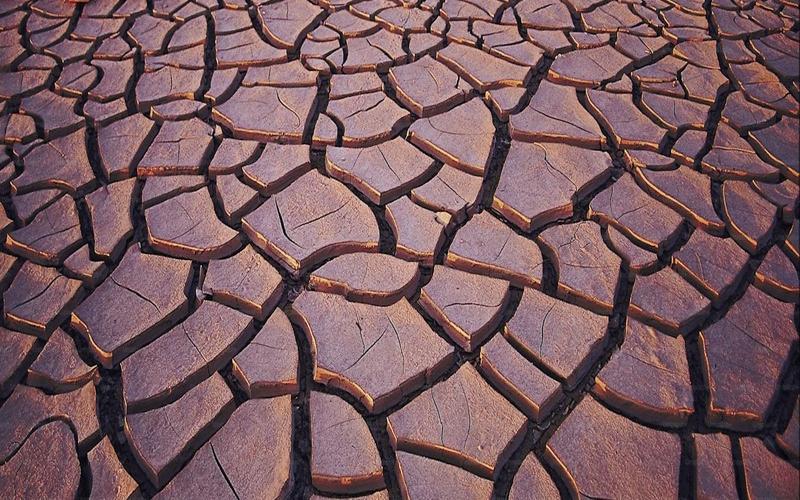
- Summer drought: Extended periods of 100+ degree heat with little rain. Clay soil contracts dramatically, pulling away from foundations and creating voids.
- Fall/Spring rains: When moisture returns, often in heavy downpours, the clay rapidly absorbs water and expands. This expansion creates upward pressure called "heave."
- Flash floods: Intense rainfall on limestone terrain creates rapid runoff that can oversaturate soil around foundations in hours.
This annual cycle repeats every year, and the cumulative effect on your foundation increases over time. A home that seemed fine for 10 years can suddenly show problems as the damage reaches a tipping point.
Why Different Parts of Your Home Settle Differently
The most damaging foundation issue isn't uniform settling; it's differential settling, where one part of your home moves more than another. In the Hill Country, this happens because:
- One side of your foundation may sit on limestone while the other sits on clay
- Landscaping, trees, and irrigation create uneven moisture around the perimeter
- Drainage patterns concentrate water on one side of the home
- Sun exposure dries out south-facing soil faster than north-facing soil
What You Can Do
While you can't change the geology, you can manage moisture around your foundation:
- Maintain consistent moisture: Water your foundation during drought with a soaker hose 12-18 inches from the slab
- Manage drainage: Ensure the ground slopes away from your foundation at least 6 inches over 10 feet
- Control trees: Large trees within 20 feet of your foundation can pull enormous amounts of moisture from the soil
- Keep gutters clean: Direct roof runoff at least 5 feet from the foundation
If you're seeing signs of foundation movement, such as cracks in walls, sticking doors, or uneven floors, schedule a free inspection. Early detection can save thousands in repair costs.